-2.png)


Introduction
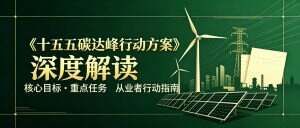
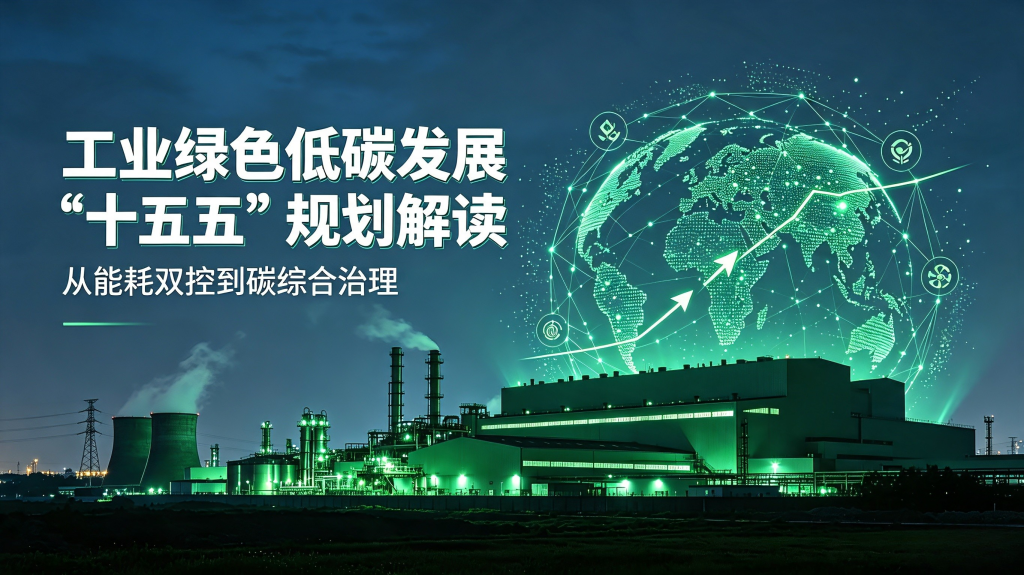
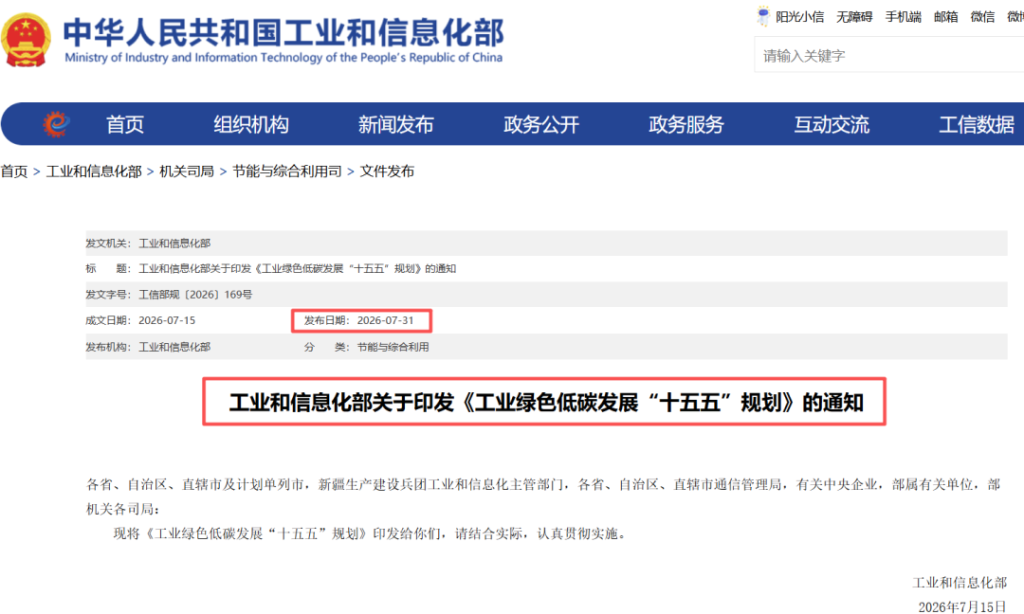
On July 31, 2026, the Ministry of Industry and Information Technology (MIIT) officially released the “15th Five-Year Plan for Industrial Green and Low-Carbon Development.” The document was formally publicized on the MIIT official website and accompanied by an authoritative interpretation via MIIT’s official WeChat channel, marking the official entry of China’s industrial green and low-carbon development into a new five-year policy cycle.
Compared to the “14th Five-Year Plan” period, the logic of industrial low-carbon policy has undergone a fundamental upgrade: shifting from extensive energy consumption control to comprehensive, refined, digital, and asset-based carbon emission governance. In the next five years, the industrial sector will no longer see “selective green transformation,” but rather a dual transformation of compliance and dividends across all industries, processes, and coverage.
Based on official MIIT planning documents and in-depth industry policy analysis, this article summarizes core policy sections, 13 industry signals, and implementation action plans for enterprises to help them quickly understand policies, avoid risks, and seize transformation opportunities.
I. Core Policy Section: MIIT “15th Five-Year Plan for Industrial Green and Low-Carbon Development”
This “15th Five-Year Plan” for industrial green and low-carbon development is the supreme guiding document for industrial energy conservation, carbon reduction, and green transformation over the next five years. The overall core theme is clear: cultivate and strengthen green productivity, and coordinate the two-way development of industrial greening and green industrialization.
The overall framework can be summarized as: 1 core action, 4 major capability enhancements, and 2 major support systems, covering all industrial sub-sectors.
1. One Core Action: Deeply Implement Carbon Peaking Actions in the Industrial Sector
Based on the industrial sector’s position as the main battlefield for carbon reduction, we will continue to optimize industrial and energy structures. Focusing on the four high-energy-consuming pillar industries—steel, petrochemicals, chemicals, and non-ferrous metals—we will advance specialized energy-saving and carbon-reduction upgrades. We will promote the large-scale replacement of clean energy such as green electricity and green hydrogen, and advance the overall industrial carbon peaking process in a steady and orderly manner, avoiding one-size-fits-all or campaign-style carbon reduction, and adhering to the principle of establishing the new before breaking the old for a smooth transition.
2. Four Major Capability Building Areas (Core Focus for the Next Five Years)
- Industrial Green Value Creation Capability
Promote comprehensive green upgrades for traditional industrial enterprises, phase out inefficient and backward processes and capacity, and simultaneously cultivate emerging green industries such as energy conservation, environmental protection, low-carbon equipment, circular economy, and carbon services, turning green transformation from a “cost item” into a “revenue item.”
- Green Equipment and Product Supply Capability
Fully popularize advanced equipment for high-efficiency energy saving, water saving, comprehensive solid waste utilization, and ultra-low emissions. Promote the standardization and large-scale production of green products, forcing enterprises to update old equipment and complete energy efficiency upgrades.
- Green and Low-Carbon Technological Innovation Capability
Focus on core technologies such as short-process smelting, low-carbon building materials, CCUS (Carbon Capture, Utilization, and Storage), new energy storage, and zero-carbon processes. Encourage enterprises to conduct R and pilot applications to support deep carbon reduction through technological innovation.
- Integration of Intelligence and Greening
Promote the deep integration of digital technology with energy saving and carbon reduction. Vigorously promote smart energy-carbon management platforms, online energy consumption monitoring systems, and digital carbon management systems to achieve a shift from manual, extensive management to data-driven refined control.
3. Two Major Support Systems (Foundation for Industry Implementation)
- Industrial Resource Recycling System
Comprehensively promote the comprehensive recycling of bulk industrial solid waste, renewable resources, industrial wastewater, and waste heat and pressure. Build circular economy industrial chains with park coupling and industrial linkage to maximize the potential for resource-based cost reduction.
- Green Manufacturing and Service System
Continue to expand the cultivation systems for green factories, green parks, green supply chains, and zero-carbon factories. Simultaneously, vigorously support third-party professional service industries such as energy auditing, energy-saving diagnosis, carbon asset management, and carbon verification to improve the industrial green and low-carbon service ecosystem.
II. 13 Core Policy Signals for the Next Five Years
Combining the full text of the “15th Five-Year Plan” and authoritative policy analysis, the energy-saving and carbon-reduction track will release 13 key signals over the next five years, which will directly determine the direction of corporate compliance, survival, and profitability:
1. Complete Shift in Management Logic: Transitioning from traditional dual control of energy consumption to a dual control system of total carbon emissions and intensity; carbon indicators will become core performance metrics for enterprises.
2. Industry as the Absolute Main Battlefield: Continued strict regulation of the four high-energy-consuming industries, with small and medium-sized manufacturing enterprises gradually included in the scope of normalized management.
3. Shift of Carbon Reduction Focus Upstream: Moving away from end-of-pipe treatment to focus on source process optimization, energy structure substitution, and equipment energy efficiency upgrades.
4. Explosion of Low-Carbon, Near-Zero, and Zero-Carbon Demonstration Factories: The “15th Five-Year Plan” will cultivate these factories on a large scale through tiered classification, with continuous increases in support for demonstration project applications and fiscal policy subsidies.
5. Digital Carbon Management as Standard: Online monitoring systems for energy consumption and carbon emissions will gradually become a mandatory standard for industrial enterprises above a designated size.
6. Enhanced Monetization of Circular Economy: Solid waste utilization, waste heat recovery, and recycled materials will be included in green output calculations, directly reducing costs and increasing revenue.
7. Accelerated Clean Energy Substitution: Strong policy support for onsite photovoltaics, green power procurement, energy storage, and green hydrogen applications, with substitution costs continuing to fall.
8. Full Expansion of the Energy-Saving Service Market: Energy auditing, energy-saving hosting, and energy performance contracting (EPC) will become mainstream modes for cost reduction.
9. Carbon Asset Management Becomes a Necessity: Carbon footprinting, verification, compliance, and CCER development will become routine tasks for enterprises.
10. Certified Professionals Required: Key energy-using units will be mandatory to employ certified professionals in energy and carbon management.
11. Accelerated Phasing Out of Backward Capacity: Increased efforts to eliminate high-energy-consuming, low-efficiency old production lines, with significantly higher approval thresholds for new projects.
12. Full Implementation of Green Supply Chains: Carbon footprint, ESG disclosure, and low-carbon qualifications will directly affect corporate bidding, customer access, and order acquisition.
13. Continued Dividends from Technical Transformation Subsidies: Special subsidies and tax incentives can be applied for energy-saving and carbon-reduction technical upgrades, low-carbon equipment updates, and green projects.
III. Industry-Specific Implementation Guide: What Should Enterprises Do Facing the “15th Five-Year Plan” New Policy?
1. High-Energy-Consuming Industries (Steel, Non-ferrous Metals, Petrochemicals, Building Materials, Basic Chemicals)
[Short-term Implementation Actions]
Comprehensively conduct professional energy audits to identify energy consumption baselines, locate high-energy-consuming bottlenecks, and form an actionable list of energy-saving upgrades; standardize the establishment of carbon ledgers, conduct regular carbon footprinting, and prepare in advance for carbon verification and policy regulation; review existing production processes, eliminate inefficient steps, and plan low-carbon process upgrade paths.
[Medium-to-Long-term Planning]
Deploy distributed photovoltaics and energy storage systems, and procure green electricity long-term to reduce carbon emissions; advance solid waste resource utilization and waste heat recovery projects; actively apply for green factory and zero-carbon factory demonstration projects; and proactively plan for CCUS pilot demonstrations and other cutting-edge low-carbon technologies like short-process manufacturing.
2. Light Industrial Manufacturing (Textiles, Paper, Machinery, Food Processing, etc.)
[Short-term Implementation Actions]
Comprehensively screen old high-energy-consuming equipment, and phase out inefficient motors, boilers, and refrigeration equipment in batches; establish a standardized energy consumption statistics system and regulate energy management ledgers.
[Medium-to-Long-term Planning]
Promote energy-saving production processes and build digital energy consumption management platforms; improve green supply chain systems to meet the low-carbon procurement requirements of downstream brand customers and enhance market competitiveness.
3. Industrial Park/Cluster Operators
Coordinate the joint construction and sharing of energy infrastructure in the park, and build systems for unified heating, waste heat recovery, and cascade utilization; build a smart energy-carbon management platform for the park to achieve unified monitoring of energy consumption and carbon emissions for park enterprises; promote resource exchange and industrial coupling among enterprises in the park to create circular economy demonstration parks.
4. Universal Action Checklist for All Industries
- Assess current status: Complete energy audits and carbon footprinting, and establish standardized energy consumption and carbon emission data ledgers;
- Assess current status: Complete energy audits and carbon footprinting, and establish standardized energy consumption and carbon emission data ledgers;
- Build capabilities: Form a professional energy-carbon management team and equip it with certified energy and carbon management professionals;
- Digital upgrade: Implement energy consumption and carbon emission monitoring systems to achieve refined and digital management;
- Phased upgrades: Prioritize short-cycle energy-saving and carbon-reduction projects, and plan for long-term clean energy substitution;
- Seize dividends: Proactively apply for green manufacturing, energy-saving technical transformation subsidies, and low-carbon demonstration projects;
- Manage carbon assets: Establish a normalized carbon management system to capitalize on carbon market expansion and CCER dividends.
IV. Conclusion
The implementation of the “15th Five-Year Plan” industrial green and low-carbon new policy marks the industry’s official departure from the era of “passive compliance” and its entry into a new cycle of green quality improvement, low-carbon efficiency enhancement, and green-promoted production.
In the next five years, whoever can take the lead in completing energy efficiency upgrades, carbon system construction, digital management, and green qualification layout will occupy an absolute advantage in industry competition and enjoy policy dividends and market premiums.
ORISEEN Energy is deeply rooted in the field of industrial energy conservation and carbon reduction. We provide enterprises across all industries with professional full-chain services: policy interpretation, energy auditing, carbon footprinting, carbon asset management, green factory applications, and customized energy-saving transformation solutions, helping enterprises smoothly and efficiently complete the “15th Five-Year Plan” green and low-carbon transition, ensuring compliance, risk avoidance, and dividend capture.
If you need a customized energy-saving and carbon-reduction transformation plan for your enterprise, please feel free to leave a message for consultation and exchange.
Reference Article: “15th Five-Year Plan for Industrial Green and Low-Carbon Development”
#15thFiveYearPlan #GreenLowCarbon #EnergySavingCarbonReduction