-2.png)


I. Policy Drivers
In September 2026, the General Office of the Ministry of Industry and Information Technology (MIIT) issued the “Requirements for Declaration of Typical Scenarios and Cases of Green Energy Applications in the Industrial and Information Technology Fields.” Industrial green microgrids ranked first among the six collection directions. The requirements mandate the integration of unified systems including photovoltaics (PV), wind power, new energy storage, waste heat/pressure/gas, and smart energy management to achieve deep synergy of “Source-Grid-Load-Storage” and high-proportion local consumption of green electricity. The “Microgrid + Smart Management + Waste Heat/Pressure + Energy Storage” combination in this plan directly responds to this direction.
The four modules support each other: the microgrid serves as the foundation, achieving Source-Grid-Load-Storage integration (with a consumption ratio of no less than 60%); Smart Energy Management (EMS) acts as the “brain,” coordinating source-load-storage and electricity price forecasting; waste heat and pressure utilization recovers sensible heat from byproduct gases and top-pressure from furnaces for power generation or heating, with the surplus connected to energy storage; new energy storage acts as the “regulator,” providing peak-valley arbitrage and frequency/voltage regulation support. The overall scope covers the “Waste Energy Utilization + Renewable Energy Generation + New Energy Storage” model defined in the Guidelines.
II. Overview
Industrial green microgrids are integrated comprehensive energy systems designed primarily to provide green power to industrial users. They integrate PV, wind power, high-efficiency heat pumps, new energy storage, hydrogen energy, waste heat/pressure, and smart energy management. They feature four core characteristics: Source-Grid-Load-Storage integration, high-proportion renewable energy consumption, grid-friendly interaction, and digital-intelligent management. In principle, the local consumption ratio of newly built renewable energy shall not be less than 60%. In 2026, projects reached an economic tipping point: the costs of PV modules, PV systems, and energy storage have all decreased significantly, while the peak-valley price gap in Jiangsu has expanded. Consequently, the investment payback period has shortened by nearly 50%, establishing a preliminary commercial closed loop.
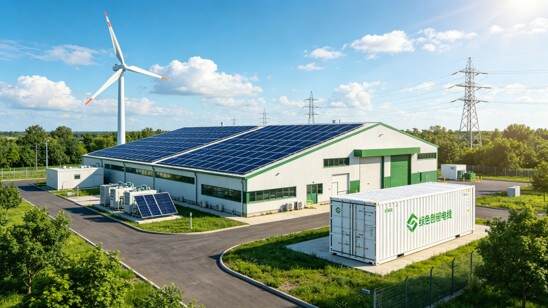
Figure 1: Panoramic Schematic of Industrial Green Microgrid
III. System Composition and Technical Solution
The system is centrally dispatched by a Digital Energy-Carbon Management Platform (EMS), which connects four major units: PV power generation, energy storage systems, adjustable loads, and grid interaction. Flexible power dispatch is achieved through flexible interconnection. Energy storage utilizes Lithium Iron Phosphate (LFP) batteries, with a total investment of approximately 2 million RMB for a 1MW/2MWh system. Investment in the EMS platform depends on the scale, generally including basic functional modules such as power generation, load, and storage management, power price forecasting, carbon management, market trading, and visualized alarms. Extended functions can be selected based on actual customer needs.
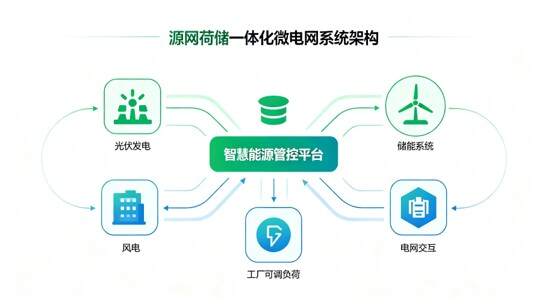
Figure 2: System Architecture of Source-Grid-Load-Storage Integrated Microgrid
IV. Four Typical Construction Scales
Categorized into four tiers based on the annual electricity consumption of applicable enterprises: Small (1MW PV + 1MW/2MWh storage, annual consumption 5–15 million kWh; for machining, light industry, electronic assembly, etc.); Medium (5MW PV + 5MW/10MWh storage, annual consumption 30–60 million kWh; for auto parts, textiles, food processing, etc.); Large (10MW PV + 10MW/20MWh storage, annual consumption 80–150 million kWh; for battery manufacturing, high-end equipment, chemicals, etc.); Ultra-Large (40MW PV + 27.6MW/80MWh storage, annual consumption over 100 million kWh; for industrial parks).
V. Investment Estimation Details
Based on 2026 Jiangsu price benchmarks: Small-scale total investment is approximately 5.5 million RMB, Medium-scale 27 million RMB, Large-scale 54 million RMB, and Ultra-Large-scale 198.2 million RMB. PV and energy storage combined account for over 90% of the total investment, forming the bulk of the costs. Investment estimates are based on mainstream market prices as of August 2026.
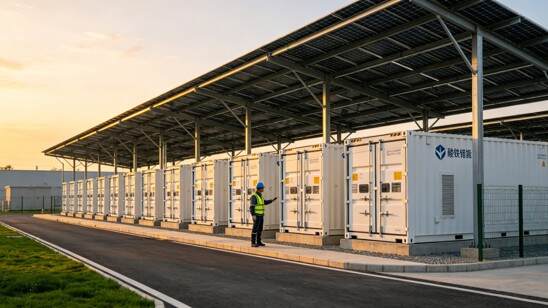
Figure 3: Real View of Lithium Iron Phosphate Energy Storage Station
VI. Revenue Model
Six major revenue sources: electricity savings from PV self-consumption, peak-valley arbitrage from energy storage, demand charge savings, demand response subsidies, surplus electricity fed into the grid, and green electricity certificates/carbon assets.
Various market cooperation models exist; the investment method and revenue model depend on the chosen cooperation mode. Enterprises, developers, and the power grid collaborate to implement project construction and O
VII. ROI Analysis for Different Scales
Depending on the construction scale, the investment payback period can be conservatively controlled within 5 years. For medium and large-scale projects, the payback period can even be reduced by 50%, bringing it down to approximately 2–3 years.
VIII. Sensitive Factors Determining Payback Period
The sensitive factors affecting the payback period and long-term profitability are primarily the peak-valley price gap, energy storage costs, and PV costs. The impact of energy storage cycle life, PV self-consumption rate, and O costs is relatively lower.
IX. Superimposed Policy Benefits in Jiangsu Province and Changzhou City
Applicable policies include: Changzhou City new energy storage station discharge subsidy of 0.3 RMB/kWh (for 2 consecutive years; a medium-scale 10MWh storage system receives approx. 1.04 million RMB annually), green electricity consumption subsidies up to 100,000 RMB/year, Jiangsu Province fast load response incentives, and Near-Zero Carbon/Zero Carbon Factory awards (up to 500,000 RMB at the municipal level and 2 million RMB at the provincial level). In a neutral scenario for medium-sized projects, the payback period can be further shortened by more than 10% after superimposing these policies.
X. Conclusion
Looking at the current market, industrial green microgrid construction is reaching a dual tipping point of policy and economics. The state has established it as a leading direction for green energy applications, ranking first in the MIIT’s 2026 typical scenario collection. For enterprises, it offers reduced electricity bills through PV self-consumption, cost savings via peak-valley arbitrage, and improved energy efficiency through waste heat/pressure recovery. Building an industrial green microgrid not only aligns with national policy directions but is also a pragmatic move for enterprises to reduce costs and gain tangible benefits. The policy tailwinds have arrived; early adopters will be the first to benefit.