Carbon Consulting Services

How to choose carbon consulting?
Clarify services and deliverables first

Even for the same carbon accounting task, the work behind a quote can vary. The depth of data verification, the materials delivered, and the level of support during third-party verification should all be clarified before cooperation.

Applicable to: Small and medium-sized thermal power plants, as well as high-emission enterprises in petrochemicals, chemicals, glass, and papermaking preparing for carbon emission control requirements.

咨询团队在明亮办公室讨论碳排放资料,AI生成场景示意

How We Can Assist

We determine the service scope based on actual needs, starting from the enterprise’s existing reports, ledgers, and vouchers.

两位工作人员共同核对报表与数据台账,AI生成场景示意

01 Carbon Emission Accounting and Report Preparation

Streamlining emission sources; verifying fuel, purchased energy, production, and testing data; and completing accounting and report preparation according to applicable industry requirements. Missing or inconsistent data will be listed item by item.

Deliverables: Accounting data tables, carbon emission reports, and a list of materials to be supplemented.

顾问与企业负责人沟通核查资料,背景展示局部仪表,AI生成场景示意

02 Support for Third-Party Carbon Verification

Organizing ledgers, test reports, and vouchers before verification; assisting in explaining data sources and calculation processes during verification; and coordinating Q&A, supplementary materials, and report revisions after verification.

Deliverables: Verification document directory, responses to inquiries, supplementary materials, and revised reports.
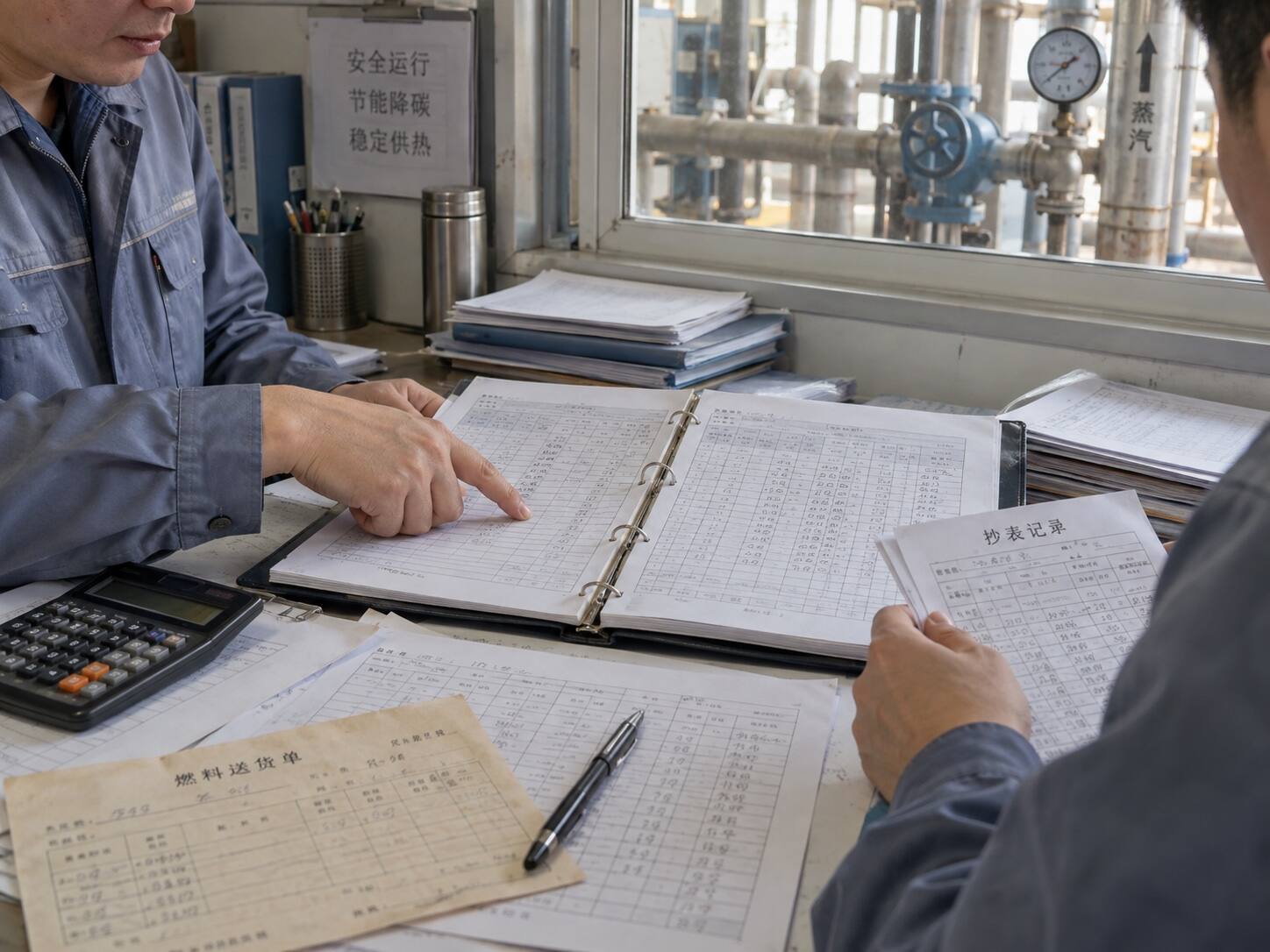
厂区工作人员核对能源台账、抄表记录和燃料单据,AI生成场景示意

03 Carbon Emission Ledger Organization

Addressing issues such as scattered data, inconsistent methodologies, and incomplete vouchers by streamlining data responsibilities across departments and assisting in establishing ledgers and archiving methods to prepare for subsequent accounting and verification.

Deliverables: Ledger templates, document archiving checklists, and recommendations for data collection division of labor.

Specific deliverables are subject to the project scope agreement.

Frequently Asked Questions

First, verify the applicable reporting notices, the list of key emission units, and industry requirements before arranging preparations. Compliance in the national carbon market, local carbon market management, and emission information reporting are distinct matters. We can start by streamlining emission sources, energy statistics methodologies, and existing vouchers to identify data gaps and departmental responsibilities. Inclusion and submission deadlines are subject to current notices from the competent authorities and are not determined solely by industry name.

We handle the accounting and document preparation on the enterprise side, while the verification agency independently verifies the report and supporting evidence; the two roles are different. We organize the document directory and check data correlations before verification, assist in explaining calculation processes and locating vouchers during verification, and coordinate responses and revisions afterward. Verification conclusions are made independently by the verification agency. The enterprise remains responsible for the submitted data; we do not substitute actual work with a “guaranteed pass.”

Typically, we start with a list of facilities, production process descriptions, and energy and production reports for the accounting year. We then supplement these with fuel inventory and consumption records, test reports, meter reading records, and vouchers for purchased electricity or heat as required. Thermal power enterprises also need to verify power generation, supply, heating, and related metering data. We distinguish between mandatory, to-be-verified, and supplementary items to provide a tailored checklist, avoiding aimless material collection.

We can begin with a data inventory, marking missing months, affected parameters, responsible departments, and the impact on accounting, then attempt to fill gaps from production systems, settlement documents, testing agencies, or archived records. For data that truly cannot be recovered, we must check if the applicable guidelines allow for default values or prescribed alternative methods, retaining the basis and explanation. Original records must not be fabricated, nor should annual averages be used to simply mask gaps.

Energy reports provide basic data, but their statistical scope, units of measurement, and aggregation methodologies may not align with carbon accounting requirements, nor can they always be traced back to testing parameters and original vouchers. Carbon emission ledgers need to correlate data periods, facilities or emission sources, quantities, units, sources, and voucher numbers, while recording conversion methods and reasons for revisions. We aim to reuse existing reports while bridging the correlations to reduce redundant data entry.

First, confirm whether the reporting is for the entire enterprise or specific power generation facilities, then streamline the boundaries for units, boilers, fuel systems, and electricity/heat metering. Calculations cannot be based solely on the scope of a business license or a single general energy report. For shared fuels, purchased energy, external heat supply, and cross-boundary transmission, data ownership and metering basis must be clarified. Data allocation is handled according to applicable guidelines and technical requirements for the current year, not assigned arbitrarily based on experience.

First, identify what each set of data represents: procurement, storage, actual consumption, and financial settlement volumes may belong to different periods and carry different meanings. We verify beginning and end-of-period inventory, metering points, unit conversions, settlement cycles, and adjustment records, then determine the data scope according to applicable accounting requirements. Discrepancies should be documented and confirmed by relevant departments, retaining original versions and revision records rather than simply selecting the smaller figure.

We recommend layered archiving by accounting year, facility or emission source, and data category, setting voucher numbers for ledger entries and maintaining correlations between reports, test reports, metering records, and revision notes. According to the “Interim Regulations on the Management of Carbon Emission Right Trading,” original records and management ledgers involved in the annual emission reports of key emission units must be kept for at least 5 years. If other archives or project requirements demand longer, those must be followed. Archiving should not only make files findable but also allow for the reconstruction of the data retrieval and calculation process.

Focus is usually on whether the accounting boundaries are complete, whether data and parameters meet requirements, whether calculations are accurate, and whether the report can be traced to original evidence. The enterprise should arrange for personnel familiar with production, metering, and data management to assist and provide materials based on the inquiry list; when on-site verification is needed, they should assist in inspecting relevant facilities and records. We are responsible for organizing evidence correlations, explaining calculation processes, and tracking supplements and revisions, but we do not confirm actual operations on behalf of the enterprise.

The duration depends mainly on the accounting year, the number of facilities, data completeness, and third-party verification schedules. We first review existing reports and submission deadlines to clarify responsibilities and milestones for data supplementation, accounting preparation, and verification support before agreeing on a schedule. Deliverables may include accounting data tables, emission reports, document directories, ledger templates, and verification response materials, as determined by the contract scope; external testing and verification scheduling must be considered separately.

Relevant Basis: Interim Regulations on the Management of Carbon Emission Right Trading; Technical Requirements for Accounting and Verification of Power Generation Facilities (2026 Update). Specific execution is subject to the requirements of the applicable industry, accounting year, and competent authorities.

Please specify your industry, accounting year, and submission deadline; if you already have a work notice or material checklist, please provide them as well.
Discuss specific requirements →