-2.png)


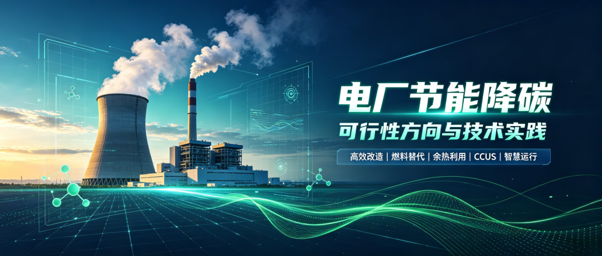
Against the backdrop of China’s deepening “dual carbon” strategy, the power industry, as the largest single source of carbon emissions, has shifted its energy-saving and carbon reduction efforts from policy requirements to an internal driver for corporate survival and development. From coal-fired power plants to gas-fired units, and from captive power plants to biomass power generation, the decarbonization paths for various types of power plants are becoming increasingly clear. A batch of mature, engineering-verified technologies is moving from demonstration to large-scale application.
I. Improving Power Generation Efficiency: Reducing Carbon Footprint at the Source
The most direct means of energy saving and carbon reduction is to generate more electricity from every gram of fuel.
In July 2026, news of the Datang Yuncheng project entering full-capacity operation attracted industry attention. As the world’s first ultra-supercritical double-reheat coal-fired unit with a reheat steam temperature exceeding 630°C, its coal consumption for power generation is as low as 245.74 g/kWh, with generation efficiency exceeding 50%. It achieved four world records: “highest pressure, highest temperature, highest efficiency, and lowest coal consumption.” Once the two 1,000 MW units are fully operational, they can save 208,000 tons of standard coal and reduce carbon dioxide emissions by approximately 540,000 tons annually. More notably, the project marked the first engineering application of the domestically produced G115 new martensitic heat-resistant steel, completely breaking the long-term foreign dominance in high-temperature materials and clearing the material bottleneck for the mass construction of similar high-parameter units.
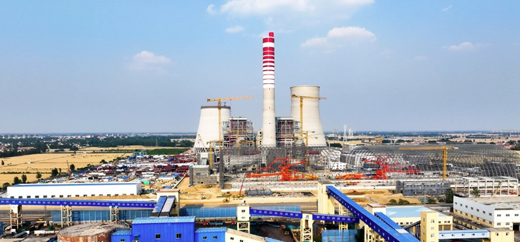
Figure 1: Datang Yuncheng Project
In Zhijin, Guizhou, another technical route has also delivered impressive results. The world’s first 660 MW ultra-supercritical “W-flame” boiler, built by SPIC, was specifically designed to address the chronic issues of high-sulfur anthracite in Southwest China, which is “difficult to ignite, difficult to stabilize, and difficult to burn out.” According to staff, the furnace uses a “W” shaped combustion design, significantly extending the residence time of anthracite in the furnace. “In the past, it took 350 grams of coal to generate 1 kWh of electricity; now it only takes 285 grams.” Power plant staff summarized the transformation effect with a simple set of data—saving 65 grams of standard coal per kWh, resulting in an annual saving of 120,000 tons of standard coal, and reducing cumulative carbon dioxide emissions by over 240,000 tons in less than a year of operation.
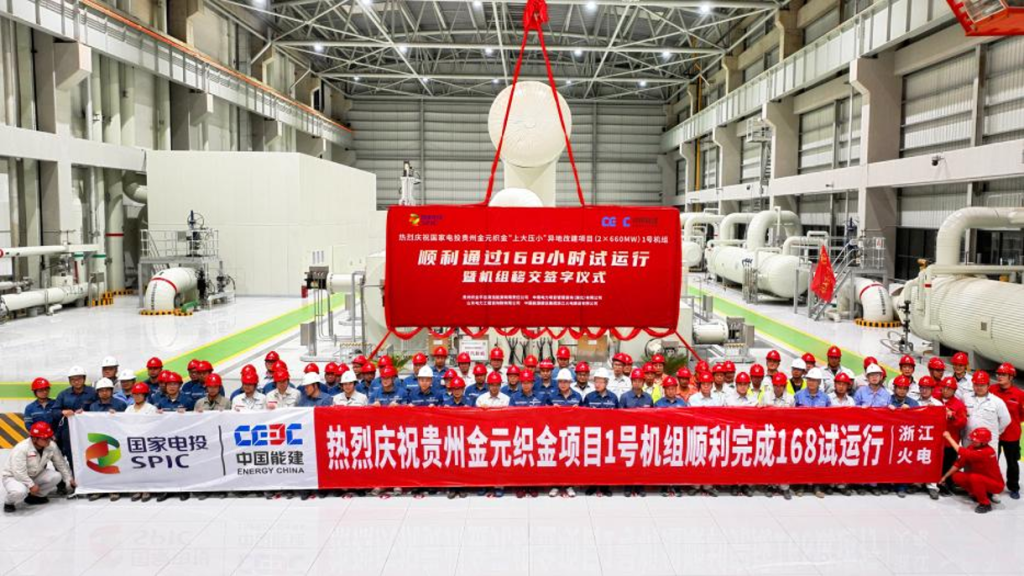
Figure 2: Guizhou Zhijin Project
For existing units, steam turbine flow path modernization is one of the technical routes with the highest return on investment. Unit 2 of the Sichuan Baima Circulating Fluidized Bed Demonstration Power Station signed a contract with Dongfang Electric for a flow path modernization with a total investment of 8.3 million yuan. After the upgrade, it can save 26,200 tons of standard coal annually, with the investment recoverable in two to three years. The core of this type of modification is to revitalize old units by optimizing blade profiles, improving steam seal structures, and reducing flow losses. According to industry statistics, after a 300 MW class unit completes flow path modernization, the coal consumption for power supply typically drops by 10 to 15 g/kWh.
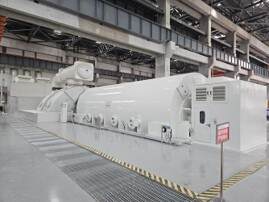
Figure 3: Unit 2 of Huadian Sichuan Company’s Neijiang Baima Gas Turbine Innovative Development Demonstration Project
II. Fuel Substitution and Co-firing: Feeding Power Plants “Low-Carbon Fuel”
If efficiency improvement is about “reducing expenditure,” then fuel substitution is about “increasing revenue”—directly reducing carbon emissions from the fuel end.
Green ammonia co-firing is one of the directions with the fastest progress in recent years. Ammonia molecules contain no carbon, and the combustion products are only nitrogen and water. The “ammonia-coal co-firing” technology developed by Longyuan Environmental Protection (a subsidiary of CHN Energy) has achieved green ammonia co-firing ratios of 10% to 30%, with an annual carbon reduction capacity of 183,700 tons. Even more cutting-edge green hydrogen co-firing technology has achieved breakthroughs—the company achieved a 50% green hydrogen co-firing ratio on a 40 MW industrial coal-fired boiler, and even possesses 100% pure hydrogen combustion capability. Although hydrogen combustion involves high temperatures, risk of deflagration, and high control difficulty, once mature, it will truly enable zero-carbon operation of thermal power.
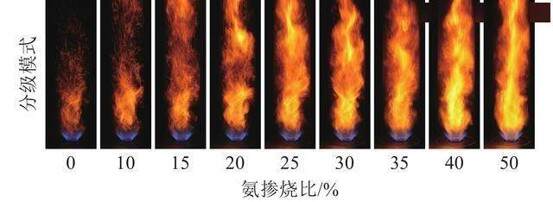
Figure 4: Effect Diagram of Ammonia Co-firing Ratios
Biomass coupled co-firing is a more practical route. In 2026, Longyuan Technology achieved engineering verification of 10% biomass co-firing in a 1,000 MW boiler at the CHN Energy Qingyuan Power Plant, filling the technical gap in biomass co-firing for large-capacity units in China. During the same period, Shaanxi Energy Linbei Power Generation Co., Ltd. also launched a biomass coupled co-firing project for circulating fluidized bed boilers, with a planned investment of 47.11 million yuan, an annual biomass co-firing volume of about 220,000 tons, and a reduction of over 230,000 tons of carbon dioxide. The carbon dioxide absorbed by biomass during growth is basically balanced with the carbon released during combustion; from a life-cycle perspective, the emission reduction effect is significant.
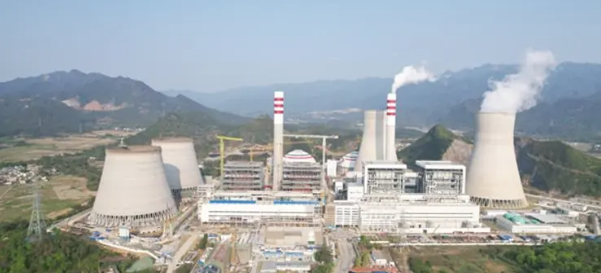
Figure 5: CHN Energy Qingyuan Power Plant
III. Deep Utilization of Waste Heat: “Picking Up” Wasted Heat
In the energy flow of a traditional power plant, about 40% to 50% of the heat is lost to the atmosphere through cooling towers. Waste heat recovery and utilization is about turning this “waste heat” into valuable commodities.
The practice in Jinan is quite representative. The Gaoxin Energy Station of Jinan Heating Group uses a 110-kilometer long-distance pipeline network to transport industrial waste heat from a power plant in Liaocheng to the urban area of Jinan, replacing 54 original coal-fired boilers in the city. According to “China Newsweek,” Jinan has thus become one of the first cities in the country to achieve “coal-free” centralized heating.
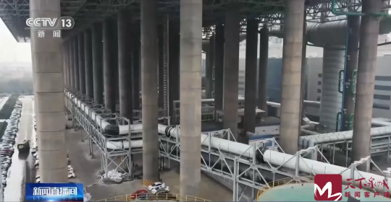
Figure 6: Jinan Waste Heat Pipeline
For power plants without long-distance transport conditions, heat pump storage technology provides another way out. CHN Energy Ningxia Lingwu Power Generation Co., Ltd. adopted a solution using large-capacity electric boilers plus heat storage tanks, converting electrical energy into thermal energy for storage during low-peak electricity price periods and releasing heat directly for heating when needed, successfully achieving decoupling of heat and power. This project was selected as a typical case of the 2025 “Three-Reform Linkage” by the China Electricity Council. However, the promotion of heat storage technology still faces constraints from electricity price mechanisms—heat storage has not yet been included in the category of “new energy storage,” making it difficult to enjoy corresponding electricity price policy support, which requires further streamlining at the policy level.
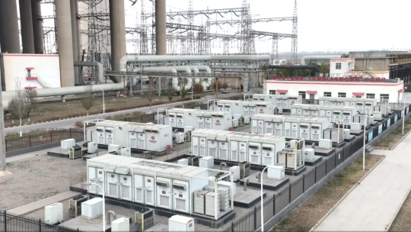
Figure 7: China’s First Full-Capacity “Flywheel Energy Storage + Thermal Power Combined Frequency Regulation” Project in the Coal Power Field
IV. End-of-Pipe Treatment: Industrial Breakthrough of CCUS
For coal-fired power plants where emission reduction is most difficult, Carbon Capture, Utilization, and Storage (CCUS) is the ultimate bottom-line technical means.
In September 2025, the world’s largest coal power carbon capture demonstration project was officially put into operation at the Huaneng Gansu Zhengning Power Plant. The project captures carbon from the net flue gas after desulfurization of Unit 1, capturing 1.5 million tons of carbon dioxide annually, with a capture rate exceeding 90% and a purity exceeding 99%. The captured carbon dioxide is compressed into a supercritical state and can be used for enhanced oil recovery (EOR) in oil fields, green fuel synthesis, and even the production of mineralized building materials, completing the entire “capture-utilization-storage” industrial chain. Lanshi Heavy Equipment provided core equipment for the project, including an 86-meter-high composite absorption tower. This domestic-first integrated square structure with three functional zones (pre-washing, absorption, and water washing) solved industry bottlenecks such as structural mechanical instability of ultra-large cross-section separation equipment and high energy consumption for capturing low-concentration flue gas.
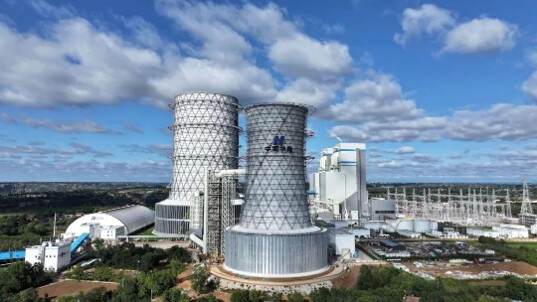
Figure 8: Huaneng Gansu Zhengning Power Plant
V. Intelligent Operation: Invisible Energy-Saving Space
Beyond hardware modifications, operational optimization also holds considerable energy-saving potential.
Power plants under CHN Energy Guoshen Company introduced the “DeepSeek” large model as an intelligent hub, connecting hundreds of sensors and imaging devices. The accuracy of equipment anomaly identification exceeds 95%, and unplanned downtime has been reduced by 40%. At the Zhundong Power Plant, the system uses knowledge graph reasoning to generate intelligent work orders containing cause analysis, disposal suggestions, and risk warnings within milliseconds. According to the production director, with the assistance of the large model, the average troubleshooting time has been shortened by nearly 70%, the adoption rate of optimized operation suggestions has reached over 90%, and more than 10,000 tons of standard coal are saved annually.
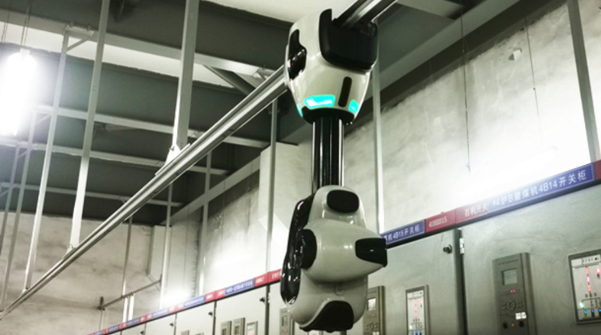
Figure 9: Inspection Robot
These seemingly insignificant “soft” modifications, when combined, often yield greater benefits than individual hardware upgrades. When the operating parameters of all auxiliary machines in a power plant can be optimized in real-time according to load changes, the saved plant power and coal over the course of a year amount to significant figures.
Conclusion
Reviewing the energy-saving and carbon reduction practices of various power plants, a clear logical chain can be summarized: first improve efficiency, then substitute fuel, then recover waste heat, and finally use CCUS as a bottom-line, while using intelligent means throughout the entire process. Every technology on this path is no longer just a laboratory concept but a mature solution that has withstood engineering verification.
For enterprises with energy-saving and carbon reduction technical services as their core business, the current period is a rare window of opportunity. At the national level, the “Implementation Plan for Special Actions for the Upgrade of New Generation Coal Power (2025–2027)” clearly states that the carbon emissions per kWh of pilot demonstration units should be reduced by 10% to 20% compared to similar types in 2024. With policy goals, technical reserves, and market demand, the next competition will be about who can combine these technologies more reasonably and implement them more efficiently.