-2.png)


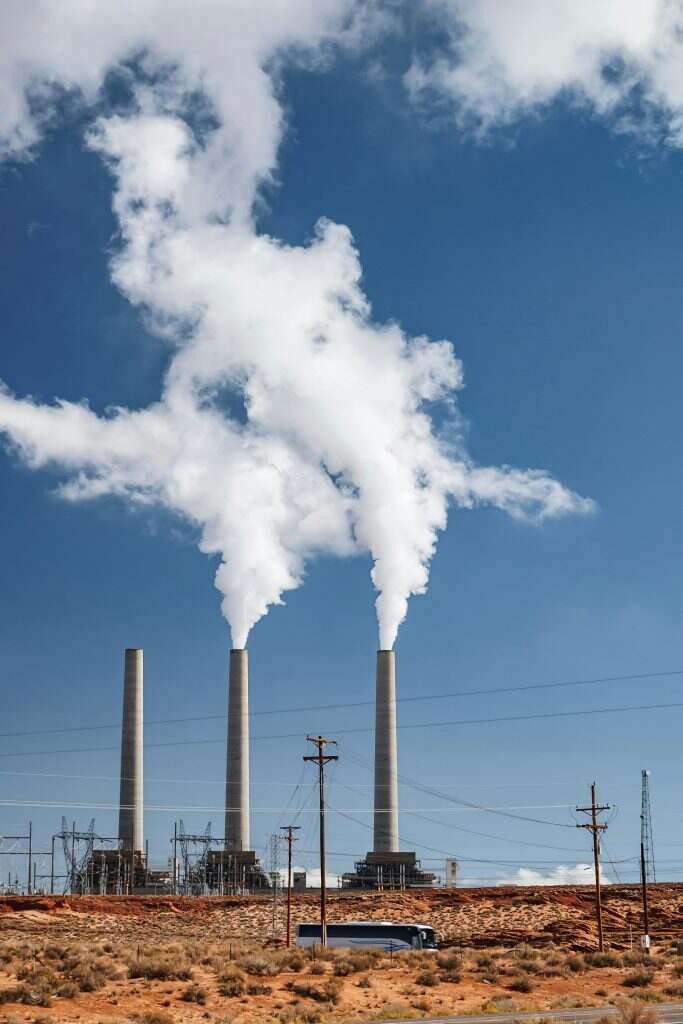
As the core industry covered by the national carbon market, the power industry accounts for over 40% of the country’s total carbon emissions and is a key battleground for achieving “dual carbon” goals. Since the launch of the national carbon market, the power generation industry has implemented a free allowance allocation model to help the market start smoothly. Now, as policies continue to deepen, allowance allocation is officially moving into a new stage of combining free and paid allocation. This transformation not only activates the vitality of the carbon market but also drives the power industry to accelerate its green and low-carbon transition, signaling a clear policy direction.
Free Allowances: A Prudent Choice for the Inception of the Carbon Market
In the early stages of national carbon market construction, the power industry implemented free allowance allocation. This meant that the competent authorities directly issued carbon emission allowances to power generation companies for free based on core indicators such as industry carbon emission benchmarks and corporate production scales. Companies fulfilled their carbon emission compliance obligations using these freely obtained allowances. The implementation of this mechanism was fully aligned with the reality of industry development and the needs of the early market construction phase. At that time, the carbon market was in its infancy, and corporate carbon emission accounting and compliance processes were not yet perfect. Issuing allowances for free could reduce short-term operational pressure on companies, ensure stable power supply and energy security, and help companies quickly familiarize themselves with carbon trading rules, facilitating the market’s transition from pilot programs to national implementation. While this model provided a buffer period for the power industry’s low-carbon transition, it also had shortcomings: free allowances made it difficult to fully reflect the environmental costs of carbon emissions, the market pricing mechanism was insufficient, companies lacked internal drive for emission reduction, and the carbon market’s restrictive and incentive effects on carbon reduction were not fully realized.
Paid Allowances: An Inevitable Trend in the Deepening of the Carbon Market
As the construction of the carbon market matures, the implementation of paid allowance allocation has become the key to breaking new ground. The “Interim Regulations on the Management of Carbon Emission Rights Trading” explicitly state that allowances are allocated for free, and a combination of free and paid allocation methods will be gradually introduced according to relevant national requirements. The “Opinions on Promoting Green and Low-Carbon Transformation and Strengthening the Construction of the National Carbon Market” issued by the General Office of the CPC Central Committee and the General Office of the State Council further deployed the steady implementation of a combined free and paid model, orderly increasing the proportion of paid allocation. This realizes the core logic of “polluter pays,” allowing carbon prices to more accurately reflect emission reduction costs and forcing companies to optimize their energy structures, improve energy efficiency, and increase investment in low-carbon technology research and development. Simultaneously, paid allowances can enhance carbon market liquidity, balance supply and demand, and allow market mechanisms to play a greater role in the allocation of carbon emission reduction resources, supporting the high-quality development of the carbon market.
Industry Shifts: Transformation of Power Enterprises is Imminent
Based on the “Interim Regulations on the Management of Carbon Emission Rights Trading” which took effect on May 1, 2024, the state has officially launched preparations for the implementation of paid carbon allowance allocation in the power industry, though a single paid allowance has not yet been set. The pace of progress will be scientifically controlled based on carbon market operations and the actual development of the power industry, steadily increasing the proportion of paid allowances. The shift from free to paid allowances has profound implications for the power industry. On one hand, the pressure on thermal power companies to reduce emissions has increased sharply; the previous model of relying on free allowances for compliance is no longer sustainable. Companies must bear additional costs for purchasing allowances, forcing them to accelerate energy-saving and carbon-reduction transformations as well as flexibility upgrades for coal power, and steadily reduce the proportion of fossil energy consumption. On the other hand, clean energy companies such as wind and solar power are seeing development opportunities, with the advantages of low-carbon power generation becoming more prominent, helping to accelerate the clean and low-carbon transition of the power industry.
This transition is not happening overnight; instead, it adheres to the principle of seeking progress while maintaining stability. It balances power supply security, industry transformation, and market stability by scientifically controlling the proportion and pace of paid allowances. This both strengthens emission reduction constraints and avoids excessive impact on normal business operations, achieving a win-win for both emission reduction and development.
The shift from free to paid is not just a change in the way carbon allowances are allocated, but also an upgrade in the low-carbon development philosophy of the power industry. In the future, as the proportion of paid allowances steadily increases, power companies must take the initiative to adapt to these changes and deepen their efforts in low-carbon emission reduction. Driven and incentivized by the carbon market, they must follow the path of green transformation to build a solid industrial foundation for achieving carbon peak and carbon neutrality goals.