-2.png)


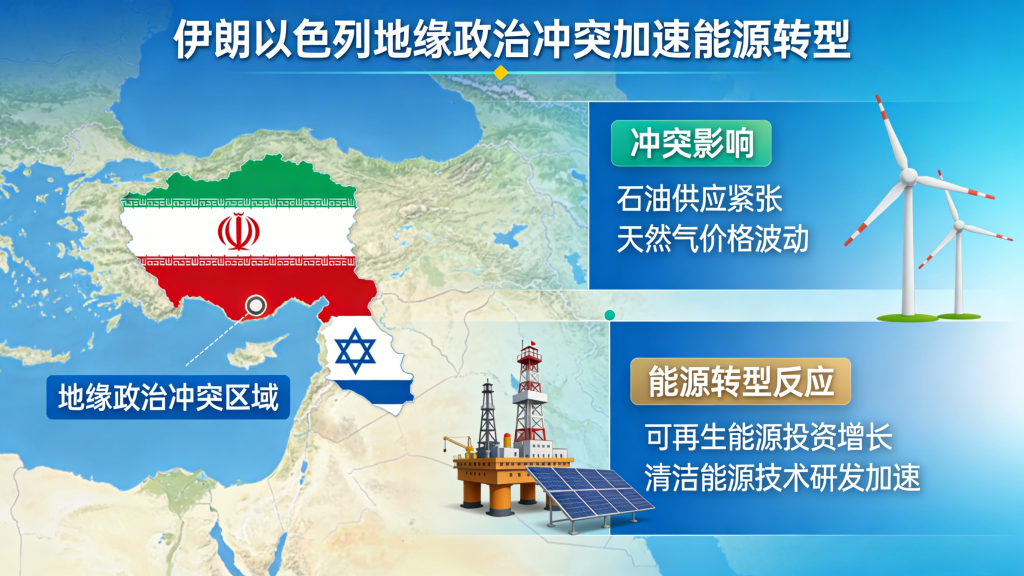
Geopolitical Conflicts Accelerate Energy Transition
Since February 28, 2026, the United States and Israel have launched a large-scale military operation against Iran, code-named “Epic Fury.” Iran immediately blockaded the Strait of Hormuz, a global energy chokepoint. Coupled with mutual attacks on oil and gas facilities by both camps, this has caused severe fluctuations in international oil prices. This geopolitical military conflict has not only driven up traditional energy prices but has also served as a catalyst to accelerate the global energy transition, profoundly altering the relationship between oil, new energy development, and carbon emissions.
The United States claimed a “nuclear threat” from Iran to initiate this military conflict; however, its substantive goal was to control Middle Eastern oil resources to maintain its global hegemony. This move by the U.S. has not only failed to achieve its narrow objectives but has also harmed many innocent civilians. Beyond the threat to lives from military strikes, the oil price volatility caused by the geopolitical conflict has impacted international livelihoods and economic vitality.
The short-term and medium-to-long-term effects of this military conflict are summarized as follows:
Accelerating Global Carbon Emissions in the Short Term
From the perspective of game theory analysis, in the short term, the United States, Israel, and Iran have become inextricably trapped in a “Prisoner’s Dilemma” regarding military actions and energy strategies. Even though mutual cooperation is the optimal solution, based on self-interested motives and a lack of mutual trust, they inevitably chose strategies of mutual betrayal, causing both camps to fall into the most unfavorable predicament.
In the short term, the United States has not only failed to control Middle Eastern oil resources but has also faced oil shortages and skyrocketing prices due to Iran’s blockade of the Strait of Hormuz. This has driven up U.S. and international prices, triggering risks of inflation and stagflation crises.
Non-oil-producing countries facing skyrocketing oil prices caused by shortages will, in order to reduce energy costs and ensure the stability of energy supply, find that their optimal response is to increase the procurement of substitutes such as coal in the short term and restart high-carbon energy sources like coal-fired power generation. This move will lead to a sharp increase in global carbon emissions.
Long-term Promotion of Energy Transition Contributes to Global Carbon Reduction
However, in the long run, the instability of oil energy will trigger energy-importing countries to accelerate the development of new energy and energy storage technologies to achieve autonomous and controllable energy structures. Therefore, while this military conflict pushes up short-term carbon emissions, it also serves as a powerful catalyst for global energy transition and long-term carbon reduction.
New Energy • New Blue Ocean
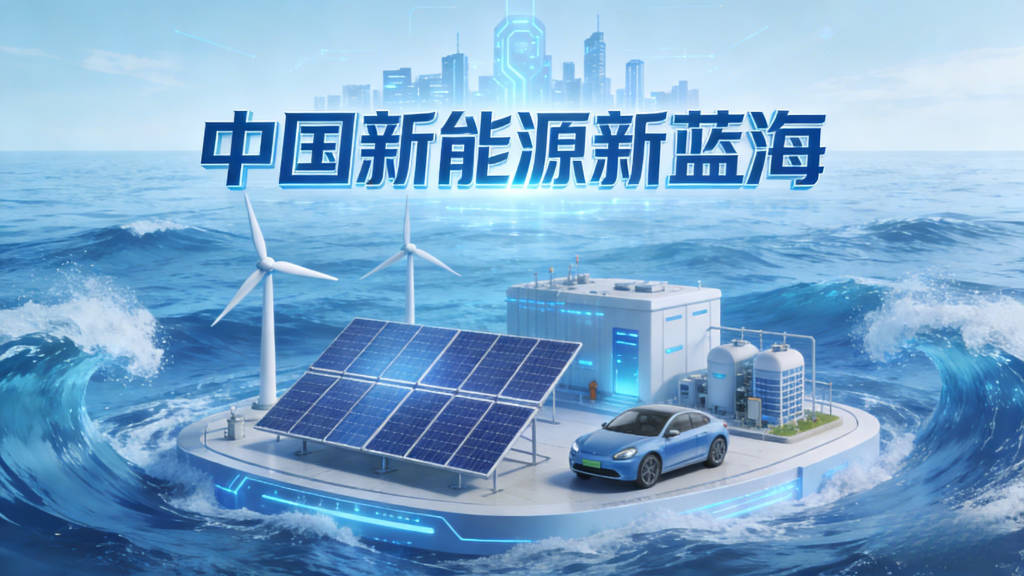
At this moment, the wisdom and foresight of our government’s long-term thinking in actively promoting new energy development is further highlighted. This began with the orderly launch of new energy policies during the “7th Five-Year Plan,” followed by the promotion of special new energy projects starting from the “9th Five-Year Plan,” through to the current “15th Five-Year Plan.” Only through such persistence can we avoid falling into the “Red Ocean” strategy of the “Prisoner’s Dilemma” and move toward a vast “New Blue Ocean.”
The current crisis serves as a stress test for our country’s long-term energy security strategy, allowing the results of 30 years of energy strategic planning to manifest. From a strategic height, it validates the foresight and correctness of the government’s new energy policies, while conversely further verifying and strengthening the direction of China’s existing energy policies.
The crisis powerfully proves that developing domestically controllable clean energy (wind, solar, hydro, nuclear) along with electric vehicles and transportation systems is the only correct path to achieving energy independence and breaking free from geopolitical constraints. Because our country possesses the world’s largest installed capacity of renewable energy and a new energy vehicle market with over 50% penetration, its economy’s sensitivity to high oil prices is far lower than that of other major economies. This is equivalent to building a “moat” against external energy shocks. Vigorously developing domestically controllable renewable energy is the fundamental way to escape geopolitical shackles.
Completing the “Stress Test” and “Strategic Validation”
The conflict between the United States, Israel, and Iran constitutes a relationship of “stress testing” and “strategic validation” for our country’s energy policy. It is both an external driver for the birth of our country’s diversified, reserved, and green energy policies and realistic evidence proving the effectiveness of this set of policies. This crisis has made our country more convinced that accelerating the transition to a new energy system with new energy as the mainstay is the inevitable path to ensuring national security and winning future competitive advantages.
Author Profile: Consultant Cheng Hui-wen

Visual Consultant for Chen San Art and CEO of the Public Welfare Foundation
Associate Professor, School of Straits Commerce, Xiamen University of Technology
Associate Professor, Department of International Business, Ming Chuan University, Taipei
Associate Professor, Department of Trade and Finance, Fu Jen Catholic University, Taipei
PhD in International Economics, National Chung Cheng University